
“Mice vs. rat vs. mouse” can be confusing because these words refer to closely related rodents, but they are not interchangeable in every situation. Understanding their meanings helps you choose the correct word in everyday conversation, school assignments, scientific writing, and professional communication. The key is to recognize the difference between singular and plural forms, as well as the physical differences between rats and mice.
Comparison Overview
The words mice, rat, and mouse all refer to small mammals belonging to the rodent group. They share features such as sharp front teeth, long tails, and an ability to adapt to different environments. However, these terms differ in grammatical number and, in ordinary usage, the type of animal they describe.
- Mice: The plural form of mouse. It refers to two or more animals commonly known as mice.
- Rat: A singular noun that generally refers to a rodent, often larger and heavier than a mouse.
- Mouse: A singular noun that refers to one small rodent. It can also refer to a computer input device.
The most important distinction is that mouse and mice are singular and plural forms of the same word, while rat names a different kind of rodent. Although rats and mice share many characteristics, they differ in size, behavior, and typical physical features.
| Feature | Mice | Rat | Mouse |
| Word type | Plural noun | Singular noun | Singular noun |
| Plural form | Mice | Rats | Mice |
| Typical animal size | Usually small | Usually larger | Usually small |
| Refers to one animal? | No | Yes | Yes |
| Refers to multiple animals? | Yes | No | No |
| Computer meaning | No, not ordinarily | No | Yes |
| Example | The mice are hiding. | The rat is hiding. | The mouse is hiding. |
Definition of Mice
Mice is the plural form of mouse. It describes two or more mice, which are generally small rodents with pointed snouts, rounded ears, long tails, and continuously growing front teeth.
Mice commonly live in fields, forests, homes, warehouses, and other environments where they can find food and shelter. House mice, in particular, can adapt well to living near humans.
Meaning and Purpose of the Word Mice
The word mice communicates that more than one mouse is being discussed. It follows an irregular plural pattern, meaning that you do not form the plural by simply adding -s or -es to the singular word.
- Singular: One mouse entered the room.
- Plural: Three mice entered the room.
- Singular: The mouse ate a piece of food.
- Plural: The mice ate pieces of food.
Notice that the word changes from mouse to mice, rather than becoming mouses in ordinary animal-related English.
When Is Mice Correct?
Use mice when you are referring to multiple animals or discussing mice as a group.
Examples:
- The mice ran behind the cupboard.
- Scientists studied mice in a controlled environment.
- Several mice were found in the storage room.
- The farmer noticed mice near the grain.
- The children learned about mice in biology class.
Remember: Mice is plural, so it normally takes plural verbs such as are, were, and have.
Correct: The mice are hiding.
Incorrect: The mice is hiding.
Definition of Rat
A rat is a rodent that generally has a larger body, thicker tail, and more robust appearance than a typical mouse. Rats belong to several species, including the brown rat (Rattus norvegicus) and the black rat (Rattus rattus).
Rats live in a wide range of environments, including cities, farms, sewers, fields, and buildings. Some species live close to humans because food and shelter are readily available.
Meaning and Purpose of the Word Rat
The word rat is a singular countable noun when it refers to one animal. It can describe a wild rodent, a pet rat, or a rat being studied for scientific purposes.
Examples:
- A rat entered the garage.
- The rat searched for food.
- A researcher observed a rat in a laboratory.
- The pet rat climbed into its enclosure.
- The rat escaped through a small opening.
The plural form of rat is rats, not rat or mice.
When Is Rat Correct?
Use rat when referring to one animal that is identified as a rat.
For example:
- A rat was seen near the dumpster.
- The rat damaged a bag of stored grain.
- A rat can squeeze through a surprisingly small opening.
- The veterinarian examined the pet rat.
- The rat ran beneath the wooden shelf.
The word can also appear in figurative expressions, such as calling someone a rat to suggest betrayal or using rat as a verb meaning to inform on someone. These meanings depend on context and are different from the animal-related meaning.
Definition of Mouse
A mouse is a small rodent with a pointed snout, rounded ears, a slender body, and a long tail. The word mouse is the singular form, meaning that it usually refers to one animal.
The term also has an important meaning in technology. A computer mouse is a handheld pointing device that lets users move a cursor, select items, and interact with a computer.
Meaning and Purpose of the Word Mouse
In everyday English, mouse commonly refers to an animal. In computing, it can refer to an electronic input device.
Examples of the animal-related meaning:
- A mouse ran across the kitchen floor.
- The mouse hid inside a cardboard box.
- A mouse built a nest near the wall.
- The mouse nibbled on a piece of cheese.
- The mouse escaped from the cage.
Examples of the technology-related meaning:
- My computer mouse stopped working.
- She bought a wireless mouse for her laptop.
- The mouse moves the cursor across the screen.
- He connected a new mouse to his desktop computer.
- The mouse has two buttons and a scroll wheel.
What Is the Plural of Mouse?
The plural of mouse is mice in standard English when referring to animals. Mice is also the usual plural for computer pointing devices.
- One mouse, two mice.
- One computer mouse, two computer mice.
In some technical contexts, mouses is also used for multiple computer devices, but mice remains the conventional and widely accepted choice.
Remember: Use mouse for one animal or device and mice for more than one.
Main Differences Between Mice, Rat, and Mouse
The main differences involve grammatical number, animal identification, and context. Mice is plural, rat is singular, and mouse is singular. Rats and mice are also commonly distinguished by their physical characteristics, although their exact appearance varies by species.
1. Difference in Grammatical Number
The clearest difference is the number of animals being discussed.
- Mice: More than one mouse.
- Rat: One rat.
- Mouse: One mouse.
Examples:
- The mice are eating.
- The rat is eating.
- The mouse is eating.
If you are discussing several rats, you should use rats. If you are discussing several mice, use mice.
2. Difference in Physical Appearance
Rats are generally larger than mice, although size varies among species and individuals.
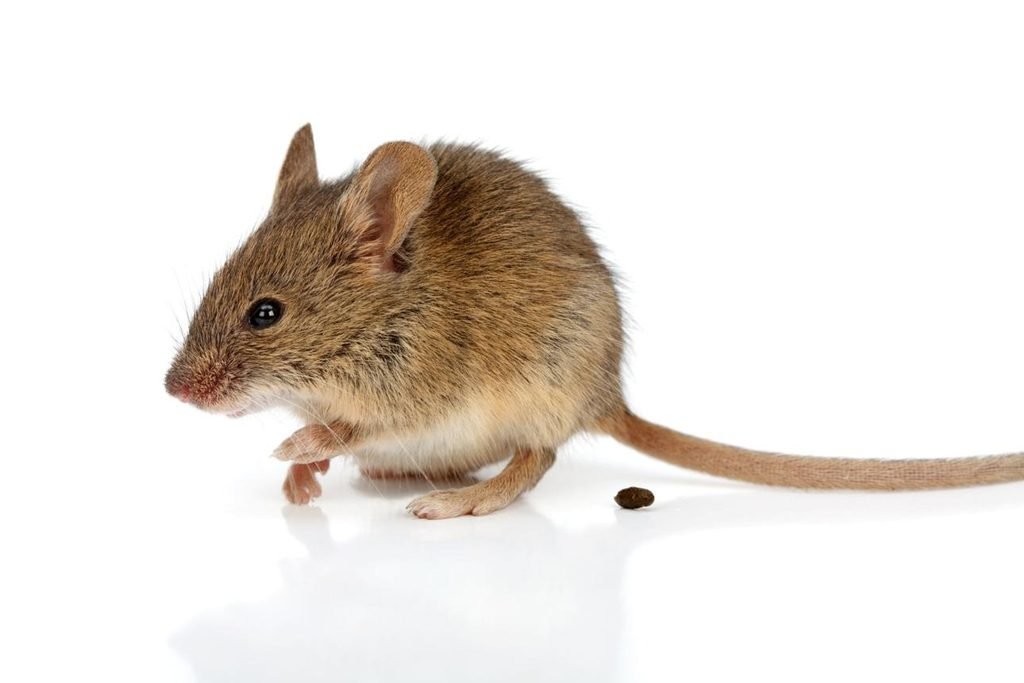
Mouse
Usually smaller, with a delicate body, relatively large ears compared with its head, a pointed snout, and a thin tail.
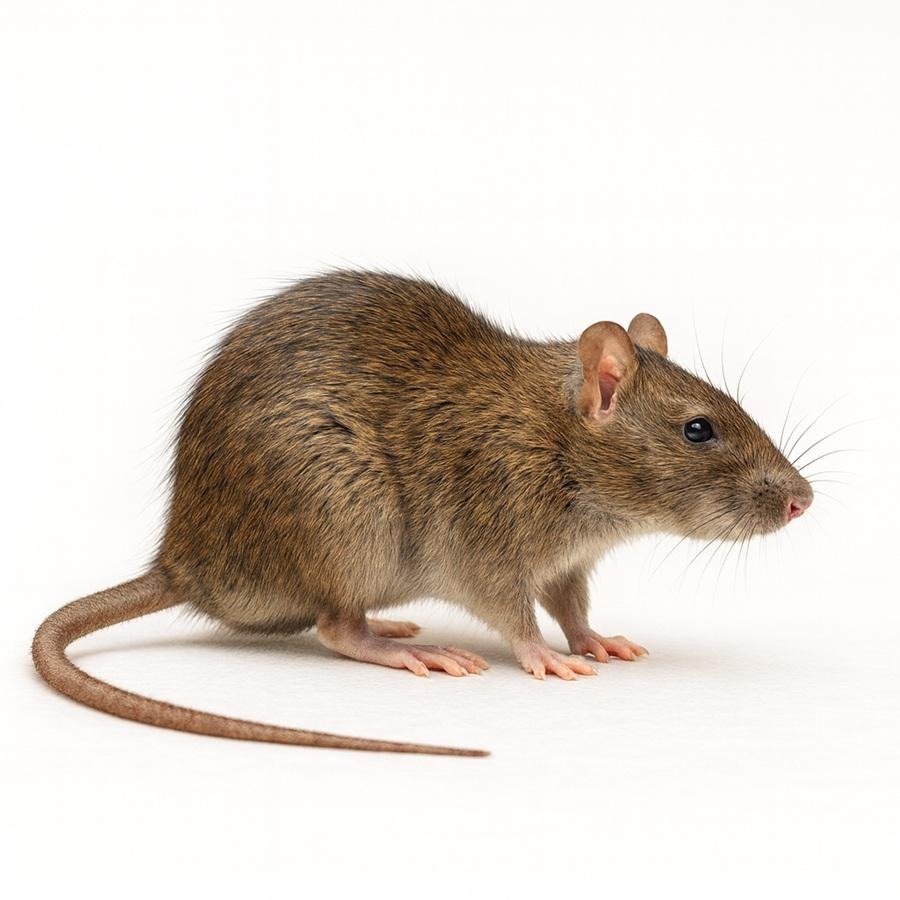
Rat
Usually larger and heavier, with a thicker body, a broader head, and a thicker tail than a typical house mouse.
These are general identifying features rather than absolute rules. Some rodents may be difficult to identify from size alone.
3. Difference in Scientific and Everyday Usage
In everyday conversation, people often distinguish rats from mice by their size and appearance. In scientific writing, the exact species is more important than a general impression of size.
For example:
- A biologist might study house mice to understand genetics.
- A public health researcher might investigate brown rats in an urban environment.
- A teacher might explain that mice and rats are both rodents but belong to different species.
The words rat and mouse are common names, not simply two sizes of the same animal.
4. Difference in Singular and Plural Forms
| Singular | Plural | Example |
| Mouse | Mice | One mouse, several mice |
| Rat | Rats | One rat, several rats |
The word mice is an irregular plural. The word rats follows the regular plural rule by adding -s.
5. Difference in Computer Terminology
In technology, a mouse is a device used to control a computer pointer. The plural is normally mice.
Examples:
- I need a new mouse for my office computer.
- The IT department ordered ten wireless mice.
- Both mice connect to the computers through Bluetooth.
The word rat does not ordinarily refer to a computer pointing device.
Rat vs. Mouse: How to Tell Them Apart
Because rats and mice are related rodents, identifying them can sometimes be confusing. However, several general features can help you distinguish between them.
| Characteristic | Typical mouse | Typical rat |
| Body | Small and slender | Larger and stockier |
| Head | Relatively pointed and delicate | Often broader and heavier |
| Ears | Often large relative to the head | Often smaller relative to the head |
| Tail | Usually thin | Often thicker |
| Droppings | Generally smaller | Generally larger |
| Common settings | Homes, fields, and buildings | Cities, farms, sewers, and buildings |
These descriptions are general tendencies, not a substitute for identifying a particular species. Both rats and mice can enter buildings, contaminate food, and carry pathogens. If you find signs of an infestation, avoid handling the animals or their droppings directly.
Grammar Guide
Understanding the grammar of mice, rat, and mouse is essential for choosing the correct word in a sentence. The words function primarily as nouns, but their number affects articles, verb agreement, and sentence structure.
How Each Term Is Used in Sentences
Mouse — singular noun
Use a mouse or the mouse when referring to one animal. For a computer device, use the same singular form.
- A mouse is hiding behind the cabinet.
- The mouse is connected to my computer.
Mice — plural noun
Use mice when referring to multiple animals or devices. Do not place a or an directly before the plural noun.
- The mice are hiding behind the cabinet.
- These mice are connected to the computers.
Rat — singular noun
Use a rat or the rat when referring to one rat.
- A rat is running through the garden.
- The rat has entered the storage room.
Rats — plural noun
Use rats when referring to more than one rat.
- The rats are searching for food.
- Several rats have been observed near the building.
Common Mistakes Learners Make
Here are some frequent errors and their corrections.
| Incorrect | Correct | Why? |
| Two mouse | Two mice | Mouse has an irregular plural. |
| Three mouses in the house | Three mice in the house | Mice is the standard plural for animals. |
| The mice is hungry. | The mice are hungry. | Mice take a plural verb. |
| A mice entered the room. | A mouse entered the room. | A requires a singular countable noun. |
| Two rat were outside. | Two rats were outside. | Rat forms its plural with -s. |
| The rat are sleeping. | The rat is sleeping. | A singular rat takes a singular verb. |
One more distinction is worth remembering: a mouse is not automatically a baby rat. Rats and mice are different kinds of rodents, even though both belong to the same broader group.
Simple Rules to Remember
- One mouse: Use mouse.
- Two or more mice: Use mice.
- One rat: Use rat.
- Two or more rats: Use rats.
- Singular subject: Usually use is, was, or has.
- Plural subject: Usually use are, were, or have.
A quick memory trick is to learn the pair mouse → mice in the same way you learn man → men or tooth → teeth. These are examples of irregular plurals.
Quick Tips for Writing and Speaking
- Count the animals or devices before choosing the noun.
- Remember that mice is already plural; do not write mices.
- Use rats when you mean more than one rat.
- Match the verb to the subject: “The mouse is” but “The mice are.”
- Use context to distinguish an animal mouse from a computer mouse.
- In scientific writing, name the species when accurate identification matters.
- In formal writing, prefer mice as the plural of a computer mouse unless a particular technical style specifies otherwise.
When to Use Each One
Each term is correct in a particular context. The best choice depends on whether you mean one animal, several animals, or a computer device.
When to Use Mice
Use mice when talking about two or more mice or multiple computer pointing devices.
Examples:
- Education: The students observed mice during a biology lesson.
- Daily life: Mice were making noises behind the kitchen cupboards.
- Science: Researchers compared the behavior of several mice.
- Business: The laboratory ordered additional mice for an approved research study.
- Technology: The office purchased wireless mice for its computer stations.
When to Use Rat
Use rat when referring to one animal identified as a rat.
Examples:
- Education: The textbook describes a rat as a rodent.
- Daily life: A rat appeared near the garbage bins.
- Science: The researcher recorded the weight of a rat.
- Business: The warehouse manager reported a rat near the loading area.
- Writing: The author described a rat escaping through a narrow tunnel.
When to Use Mouse
Use mouse when referring to one mouse, whether it is an animal or a computer device.
Examples:
- Education: A mouse appeared in the children’s science book.
- Daily life: The mouse hid behind the refrigerator.
- Science: The researcher observed a mouse in its enclosure.
- Business: I use a computer mouse to edit documents.
- Technology: She replaced her old mouse with a wireless model.
When NOT to Use Each One
Knowing when a word is incorrect helps prevent common mistakes.
When Not to Use Mice
Do not use mice when referring to only one animal or one computer device.
Incorrect: A mice ran across the floor.
Correct: A mouse ran across the floor.
Also avoid adding another plural ending to the word.
Incorrect: The mices are hiding.
Correct: The mice are hiding.
When Not to Use Rat
Do not use rat as the plural of rat, and do not substitute it for mouse when you specifically mean a mouse.
Incorrect: Three rat entered the shed.
Correct: Three rats entered the shed.
Incorrect: My computer rat stopped working.
Correct: My computer mouse stopped working.
When Not to Use Mouse
Do not use mouse when referring to several mice in standard animal-related English.
Incorrect: Five mouse were found in the barn.
Correct: Five mice were found in the barn.
Likewise, do not confuse a mouse with a rat simply because both are rodents. If you know the animal is a rat, use rat or rats as appropriate.
Which One to Use (Decision Guide)
Choosing between mouse, rat, and mouse becomes simple when you identify what you mean before writing.
Choose the correct word.
1. What are you referring to?
An animal
A computer pointing device
2. How many are there?
One mouse
Two or more mice
One rat
Two or more rats
Mouse
Use mouse for one animal identified as a mouse.
Use these quick questions if you prefer a simple rule:
- Am I referring to one mouse? Choose mouse.
- Am I referring to several mice? Choose mice.
- Am I referring to one rat? Choose rat.
- Am I referring to several rats? Choose rats.
- Am I discussing a computer device? Use mouse for one and usually mice for more than one.
Real-World Practical Examples
The following examples demonstrate how these terms work in education, everyday life, science, business, technology, and other situations.
Mice Examples
- Education: The teacher explained how mice adapt to different environments.
- Daily life: We heard mice moving inside the wall last night.
- Science: The research team studied the behavior of mice in a controlled environment.
- Business: The warehouse supervisor arranged a professional inspection after discovering signs of mice.
- Technology: The IT department supplied ergonomic mice to employees.
- Nature: Mice searched for seeds beneath the fallen leaves.
- Storytelling: The mice gathered food before the winter arrived.
Rat Examples
- Education: The biology lesson explained how a rat differs from a mouse.
- Daily life: A rat ran behind the outdoor rubbish bin.
- Science: The scientist recorded measurements from a rat.
- Business: The restaurant manager contacted pest control after spotting a rat.
- Writing: The novelist described a rat exploring an abandoned building.
- Nature: A rat searched for food near the riverbank.
- Conversation: “I saw a rat near the garage,” Daniel told his neighbor.
Mouse Examples
- Education: The child drew a picture of a mouse for a science assignment.
- Daily life: A mouse slipped beneath the kitchen cabinet.
- Science: The researcher monitored one mouse during the experiment.
- Business: I use a wireless mouse when preparing presentations.
- Technology: The computer mouse stopped responding after its battery ran out.
- Storytelling: The mouse found a safe place to hide.
- Conversation: “Could you pass me the mouse?” the technician asked.
Self-Assessment (Fill in the Blanks)
Test your understanding of the differences between mice, rat, and mouse. Fill in each blank with the correct word. Some questions also test the plural forms rats and sentence agreement.
- I saw one ______ running across the kitchen floor.
- Several ______ were hiding behind the boxes.
- The ______ escaped from the cage yesterday.
- Two ______ entered the storage room last night.
- My computer ______ needs a new battery.
- The laboratory studied several ______ during the experiment.
- A ______ is generally larger than a typical house mouse.
- The ______ are searching for food near the barn.
- She connected a wireless ______ to her laptop.
- Three ______ were observed near the grain containers.
- The ______ is sleeping inside its enclosure.
- Multiple computer ______ were delivered to the office.
- The teacher showed the class a picture of a ______.
- The ______ were making noises inside the wall.
- A researcher examined one ______ in the laboratory.
- The farmer reported seeing several ______ near the rubbish bins.
- One ______ ran under the refrigerator.
- The ______ are being studied by the researchers.
- The technician replaced the broken computer ______.
- The zoologist explained that a ______ and a rat are different kinds of rodents.
Answers
Here is the numbered answer key for all 20 questions, with brief explanations to reinforce the rules.
- Mouse — One animal requires the singular noun.
- Mice — This is the plural form of mouse.
- Rat — One rat takes the singular form.
- Rats — The regular plural of rat is rats.
- Mouse — One computer pointing device is a mouse.
- Mice — Several animals identified as mice require the plural form.
- Rat — Rat refers to a rodent generally larger than a typical house mouse.
- Mice — The plural subject takes the plural verb are.
- Mouse — One computer device takes the singular form.
- Rats — Three rats require a plural noun.
- Mouse — One animal takes the singular noun, and the verb is.
- Mice — Mice is the usual plural form for computer pointing devices.
- Mouse — A picture of one animal calls for the singular form.
- Mice — Multiple animals require the plural form.
- Mouse — The sentence refers to one animal identified as a mouse.
- Rats — Several rats require the plural form.
- Mouse — One animal requires the singular form.
- Mice — The plural subject agrees with are.
- Mouse — The technician replaced one computer device.
- Mouse — The sentence compares one mouse with a rat.
Final Verdict
The difference between mice, rat, and mouse is easy to understand once you separate grammar from animal identification. Mouse is the singular form, while mice is its irregular plural. Rat refers to a different kind of rodent, and its plural form is rats.
Use mouse when discussing one mouse or one computer pointing device. Choose mice when referring to multiple mice or, ordinarily, multiple computer pointing devices. Use rat for one rat and rats for more than one.
Remember that rats and mice share many characteristics, but they are not simply different grammatical forms of the same word. They are commonly distinguished by their physical features and species, although their exact characteristics vary.
For confident writing, count the animals or devices, identify what you mean, and make sure your verb agrees with the noun. With these simple rules, you can use all four forms—mouse, mice, rat, and rats—correctly in everyday conversations, academic assignments, professional writing, and technology-related discussions.
Conclusion
Understanding the differences between mice, rats, and a mouse makes it easier to identify these small rodents and learn what makes each one unique. While mice are generally smaller, with slender bodies, large ears, and pointed snouts, rats tend to have larger bodies, thicker tails, and broader heads. The word “mouse” refers to a single animal, while “mice” is its plural form. Rats and mice also differ in their behavior, habitats, and typical living habits.
When comparing mice v. rats, remember that the main distinction involves size, physical features, and the correct use of singular and plural words. Although these rodents share similarities, recognizing their differences can help you understand their characteristics and identify them more accurately. Whether you’re researching rodents for educational purposes, identifying a household pest, or improving your animal knowledge, understanding these terms provides a helpful starting point. With these basics in mind, distinguishing between mice and rats becomes much simpler.
FAQs
What is the difference between mouse, rat, and mice?
Mouse and mice refer to the same type of small rodent, but they differ grammatically. Mouse is singular, while mice is plural. Rat refers to a different group of rodents that are generally larger and have heavier bodies. Comparing their physical characteristics helps distinguish rats from mice in everyday situations.
Is a mouse the same as a rat?
No, a mouse is not the same as a rat. Both belong to the rodent group, but they differ in size, appearance, and behavior. Mice are typically smaller, with relatively large ears and delicate bodies, whereas rats are often larger and more robust. Their specific characteristics depend on the species.
Is mice singular or plural?
Mice is the plural form of mouse. When referring to one animal, use mouse, such as “a mouse is hiding.” When referring to two or more animals, use mice, as in “the mice are eating.” This is an irregular plural because the word changes instead of simply adding an “s.”
Are rats bigger than mice?
Yes, rats are generally larger than mice. Many rats have longer bodies, heavier builds, thicker tails, and broader heads. Mice are usually smaller, lighter, and more delicate in appearance. However, size varies among species, so body shape, ear size, tail proportions, and other physical features can also help with identification.
How can you tell a mouse from a rat?
Look at the animal’s overall size, head shape, ears, and tail. Mice typically have small bodies, relatively large ears, pointed snouts, and thin tails. Rats usually have heavier bodies, broader heads, and thicker tails. Since young rats can resemble adult mice, size alone may not always provide a reliable identification.
Why is the plural of mouse mice instead of mouses?
The word mice comes from an older English plural pattern in which certain nouns changed their vowel sounds instead of adding a regular ending. Similar historical patterns appear in words such as foot and feet. Although “mouses” occasionally appears in specialized contexts, particularly computing, mice is the standard plural for the animal.
Do mice and rats belong to the same animal family?
Mice and rats are both rodents and belong to the order Rodentia. Many familiar species of mice and rats belong to the family Muridae, although the common names cover multiple species. They share features such as continuously growing incisors, but they differ in body size, behavior, habitat preferences, and other characteristics.
Are mice more dangerous than rats?
Neither mice nor rats are universally more dangerous than the other. Both can contaminate food, damage property, and carry pathogens or parasites. The risks depend on the species, environment, and extent of an infestation. Avoid handling wild rodents, seal food securely, and contact a qualified pest-control professional when necessary.
What is the difference between a baby rat and an adult mouse?
A baby rat may resemble an adult mouse because both can have small bodies and pointed snouts. However, young rats often have different body proportions as they develop, and their size increases quickly. Identifying the animal can require examining its head, feet, tail, and overall shape rather than relying on size alone.
How do you use mice vs rat vs mouse correctly in a sentence?
Use mouse when discussing one mouse and mice when discussing multiple mice. Use rat when referring to one rat and rats for more than one. For example, “A mouse entered the kitchen,” “Two mice were spotted,” and “A rat was found near the storage area.” Correct usage makes writing clearer and more accurate.

