
A great smile can express happiness, warmth, confidence, mischief, or pure joy without saying a word. Best Similes for Smiles help writers describe these feelings with vivid and memorable comparisons. Whether you are writing a story, poem, caption, speech, or school assignment, the right simile can make a simple smile feel alive. This guide gives you creative, funny, poetic, romantic, and playful examples you can easily use in your writing.
Definition of Best Similes for a Smile
Best Similes for a Smile are creative comparisons that describe a smile by connecting it to something familiar, beautiful, funny, bright, or expressive. They usually use comparison words such as “like” or “as” to show a shared quality.
For example, saying “Her smile was like sunshine after rain” compares the smile with sunshine to emphasize its warmth and happiness.
These comparisons help readers imagine not only how a smile looks but also how it makes people feel.
What Is a Simile?
A simile is a figure of speech that directly compares two different things using words such as “like” or “as.” The comparison highlights a particular quality shared by both things. Writers use similes to make descriptions clearer, more colorful, emotional, and memorable.
Example
- Her smile was like sunshine on a cold morning.
- He grinned like a kid who had just found candy.
- Her smile was as bright as a summer morning.
- His smile spread like ripples across a quiet pond.
- She smiled like a flower opening in spring.
A simile does not mean that the two things are literally the same. Instead, it draws attention to a particular similarity. For instance, a smile cannot literally be sunshine, but comparing the two suggests warmth, brightness, and happiness.
Why Use Best Similes For Smile in Writing?
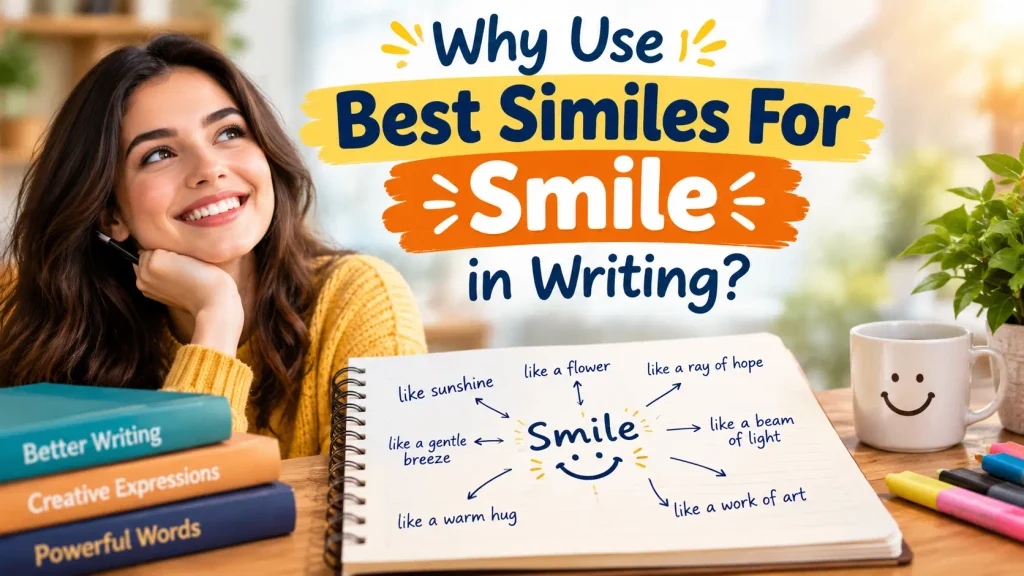
Using Best Similes For Smile can make ordinary descriptions more vivid and interesting. A simple sentence such as “She smiled” tells readers what happened, but a creative comparison can show them how that smile looked or felt.
- Create vivid imagery: A strong comparison helps readers picture the smile.
- Show emotion: A smile can communicate joy, relief, love, confidence, or mischief.
- Make writing memorable: Creative comparisons give ordinary sentences more personality.
- Add humor: Funny smile similes can make stories and captions more entertaining.
- Create atmosphere: A gentle smile can make a scene feel warm and peaceful.
- Strengthen descriptions: Similes give writers more precise ways to describe facial expressions.
- Improve storytelling: Characters become easier to visualize when their expressions feel distinctive.
- Add poetic beauty: Writers can use nature, light, music, and other imagery to make descriptions lyrical.
- Connect with readers: Familiar comparisons make abstract emotions easier to understand.
- Avoid repetitive language: Similes provide alternatives to repeatedly writing “she smiled” or “he grinned.”
Similes work best when they clarify or strengthen an idea rather than simply adding decoration. Clear, purposeful comparisons generally communicate more effectively than forced figurative language.
Types of Similes
You can create smile similes in many styles. Some focus on appearance, while others emphasize emotion, humor, personality, or atmosphere.
Visual Similes
Visual similes compare a smile with something readers can easily picture. They often use light, colors, nature, or familiar objects.
Example
- Her smile was like a golden sunrise.
- His grin was as bright as a polished coin.
- Her smile curved like a crescent moon.
- His teeth flashed like tiny stars.
- Her smile looked like sunlight dancing on water.
These comparisons work especially well in descriptive stories because they give readers an immediate mental picture.
Emotional Similes
Emotional similes focus less on appearance and more on the feeling created by a smile. They can describe comfort, love, excitement, relief, or happiness.
Example
- Her smile felt like a warm blanket on a chilly night.
- His grin was like good news arriving at the perfect moment.
- Her smile spread like happiness through a crowded room.
- His expression was as comforting as a familiar song.
- Her smile was like a little piece of home.
These similes help readers understand the emotional effect of a character’s smile.
Funny and Playful Similes
Funny similes add personality and can make captions, stories, and casual writing more entertaining.
Example
- He grinned like a kid who had secretly eaten the last cookie.
- Her smile appeared like Wi-Fi when you finally need it.
- He smiled as proudly as a cat sitting on a stolen sandwich.
- Her grin was like a joke that refused to stay serious.
- He smiled as if his face had just won the lottery.
These comparisons deliberately use unexpected images, which makes them more memorable.
Romantic Similes
Romantic similes connect smiles with warmth, beauty, affection, and intimacy.
Example
- Her smile was like moonlight on a quiet lake.
- His smile was as gentle as a love letter.
- Her grin warmed the room like candlelight.
- His smile was like a secret shared between two hearts.
- Her smile sparkled like stars over a summer night.
Romantic comparisons work well in love stories, poetry, wedding messages, and affectionate captions.
Writing Tips and Common Mistakes
Useful Tips
- Choose a clear comparison: Compare the smile with something readers immediately recognize.
- Match the emotion: Use sunshine for warmth, lightning for excitement, or velvet for softness.
- Consider the character: A mischievous character needs a different smile than a shy character.
- Keep the comparison natural: The best simile should feel intentional rather than random.
- Use fresh imagery: Avoid relying only on overused comparisons.
- Vary your structure: Alternate between “like” and “as” constructions.
- Think about context: A funny simile may work beautifully in a comedy but feel inappropriate in a serious scene.
- Use sensory details: Light, warmth, sound, movement, and texture can all inspire effective comparisons.
- Avoid unnecessary explanation: Let the image communicate the feeling.
- Read the sentence aloud: If the simile sounds awkward, rewrite it.
Purdue OWL also recommends defining unfamiliar ideas in simple, familiar language and avoiding unnecessary complexity. That principle works well when creating figurative descriptions too: a clever comparison should remain understandable to the reader. (Purdue OWL)
Common Mistakes to Avoid
- Using a confusing comparison: “Her smile was like a complicated spreadsheet” may distract readers unless humor is intentional.
- Mixing comparisons: Avoid combining unrelated images in one sentence.
- Overusing clichés: “Smile like the sun” works, but using it repeatedly can make writing feel predictable.
- Forcing the word “like”: A simile should create a meaningful comparison, not merely contain a comparison word.
- Choosing the wrong emotion: A storm may suggest intensity or sadness, so it may not suit a peaceful smile.
- Making the comparison too long: A simple image often has more impact than a paragraph-long comparison.
- Confusing similes with metaphors: “Her smile was sunshine” is a metaphor, while “Her smile was like sunshine” is a simile.
- Repeating the same structure: Too many sentences beginning with “Her smile was like…” can sound mechanical.
- Ignoring the character: The comparison should fit the person’s personality and the scene.
- Using imagery without purpose: Every comparison should contribute to mood, description, humor, or meaning.
30 Best Similes For Smile
The heading uses 30 to follow your requested title format, but the main section below includes all 50 original smile similes as requested.
Her Smile Was Like Sunshine After Rain
Meaning: Her smile brings warmth, happiness, and relief after a difficult moment.
Detailed Explanation: This comparison connects a smile with the comforting brightness that appears when rain finally ends. It works especially well when someone brings hope after sadness or trouble.
Tone: Warm, hopeful, uplifting.
Examples:
- Her smile was like sunshine after rain, instantly lifting everyone’s mood.
- When she walked into the room, her smile felt like sunshine after rain.
- His encouraging words and smile were like sunshine after rain.
His Smile Was Like a Sunrise

Meaning: His smile was bright, beautiful, and full of new energy.
Detailed Explanation: A sunrise represents a fresh beginning. Comparing a smile with a sunrise suggests that it can make a situation feel new, peaceful, and promising.
Tone: Poetic, hopeful, peaceful.
Examples:
- His smile was like a sunrise over a quiet mountain.
- Her morning greeting came with a smile like a sunrise.
- That smile was like a sunrise after the longest night.
Her Smile Sparkled Like Stars
Meaning: Her smile looked bright, lively, and beautiful.
Detailed Explanation: Stars create a sense of wonder and brightness. This simile gives a smile a magical quality without making the description too complicated.
Tone: Romantic, dreamy, poetic.
Examples:
- Her smile sparkled like stars across a midnight sky.
- His eyes lit up when her smile sparkled like stars.
- She greeted everyone with a smile that sparkled like stars.
His Grin Was Like a Jackpot
Meaning: His smile showed extreme excitement and satisfaction.
Detailed Explanation: A jackpot represents unexpected success or great fortune. This playful comparison suggests that his grin was impossible to hide.
Tone: Funny, playful, energetic.
Examples:
- He wore a grin like a jackpot winner.
- His grin was like a jackpot after he heard the good news.
- She knew something had happened when he smiled like a jackpot winner.
Her Smile Was as Warm as Candlelight
Meaning: Her smile felt gentle, comforting, and welcoming.
Detailed Explanation: Candlelight creates a soft and cozy atmosphere. This comparison works well when describing a kind person whose smile makes others feel safe.
Tone: Gentle, cozy, affectionate.
Examples:
- Her smile was as warm as candlelight on a winter evening.
- The nurse greeted everyone with a smile as warm as candlelight.
- His grandmother had a smile as warm as candlelight.
His Smile Was Like a Secret Joke
Meaning: His smile suggested that he knew something amusing.
Detailed Explanation: A secret joke creates curiosity and playful mystery. This simile works especially well for mischievous characters.
Tone: Mischievous, humorous, playful.
Examples:
- He smiled like a secret joke nobody else understood.
- Her brother grinned like a secret joke was hiding in his pocket.
- His smile looked like a secret joke waiting to escape.
Her Smile Was Like a Flower Opening
Meaning: Her smile appeared gradually and beautifully.
Detailed Explanation: A flower opening suggests natural beauty and gentle transformation. This simile suits shy smiles particularly well.
Tone: Delicate, poetic, gentle.
Examples:
- Her smile was like a flower opening in spring.
- His face softened with a smile like a flower opening.
- She gave him a smile like a flower opening beneath the morning sun.
His Smile Was as Bright as a Flashlight
Meaning: His smile was extremely noticeable and energetic.
Detailed Explanation: A flashlight immediately attracts attention in darkness. This humorous comparison emphasizes the strength and visibility of his smile.
Tone: Funny, energetic, casual.
Examples:
- His smile was as bright as a flashlight in a dark room.
- She noticed his flashlight-bright smile from across the hall.
- His smile appeared as bright as a flashlight when he saw the surprise.
Her Smile Was Like Music
Meaning: Her smile created a pleasant and uplifting feeling.
Detailed Explanation: Music can affect emotions without using words. Comparing a smile to music suggests that simply seeing it can make people feel happier.
Tone: Poetic, emotional, graceful.
Examples:
- Her smile was like music on a quiet afternoon.
- His face changed when her smile appeared like music.
- Everyone seemed happier when she gave them a smile like music.
His Smile Was Like a Green Light
Meaning: His smile communicated encouragement, permission, or confidence.
Detailed Explanation: A green light signals that it is safe to move forward. This comparison works well when someone’s smile encourages another person to act.
Tone: Positive, modern, encouraging.
Examples:
- His smile was like a green light telling me to keep going.
- She took his smile as a green light to share her idea.
- His approving grin felt like a green light.
Her Smile Was as Soft as Velvet
Meaning: Her smile seemed gentle, elegant, and soothing.
Detailed Explanation: Velvet has a soft and luxurious texture. The comparison gives the smile a refined and comforting quality.
Tone: Elegant, romantic, gentle.
Examples:
- Her smile was as soft as velvet.
- He remembered her velvet-soft smile long after she left.
- She welcomed the nervous child with a smile as soft as velvet.
His Smile Was Like a Winning Goal
Meaning: His smile showed excitement and triumph.
Detailed Explanation: A winning goal creates a burst of happiness and celebration. This simile suits moments of achievement.
Tone: Excited, celebratory, energetic.
Examples:
- His smile was like a winning goal in the final second.
- She gave a smile like a winning goal when her name was announced.
- His face lit up as if a winning goal had just appeared.
Her Smile Was Like a Warm Hug
Meaning: Her smile made people feel safe, loved, and comfortable.
Detailed Explanation: A warm hug provides emotional comfort. Comparing a smile with a hug emphasizes its reassuring effect.
Tone: Comforting, affectionate, heartfelt.
Examples:
- Her smile was like a warm hug after a difficult day.
- His mother’s smile felt like a warm hug.
- She greeted every frightened child with a smile like a warm hug.
His Smile Was Like a Firework
Meaning: His smile appeared suddenly with excitement and energy.
Detailed Explanation: Fireworks burst into bright colors and immediately capture attention. This simile fits spontaneous, energetic smiles.
Tone: Exciting, dramatic, playful.
Examples:
- His smile exploded like a firework when he opened the gift.
- Her face lit up like a firework.
- His sudden grin was like a firework in the middle of silence.
Her Smile Was as Fresh as Spring
Meaning: Her smile felt cheerful, refreshing, and full of life.
Detailed Explanation: Spring represents renewal, growth, and fresh beginnings. This makes the comparison useful for describing optimistic personalities.
Tone: Fresh, cheerful, optimistic.
Examples:
- Her smile was as fresh as spring after a long winter.
- He loved her spring-fresh smile.
- She entered the room with a smile as fresh as spring.
His Grin Was Like a Cheshire Cat
Meaning: His grin was wide, mischievous, and difficult to hide.
Detailed Explanation: The familiar image of a very broad grin creates an immediately playful picture.
Tone: Mischievous, humorous, playful.
Examples:
- He wore a grin like a Cheshire Cat.
- She knew he had planned something when he smiled like a Cheshire Cat.
- His grin stretched across his face like a Cheshire Cat’s.
Her Smile Was Like Moonlight
Meaning: Her smile was gentle, calm, and quietly beautiful.
Detailed Explanation: Moonlight creates a peaceful atmosphere rather than an intense burst of brightness. This makes the comparison suitable for subtle smiles.
Tone: Romantic, calm, dreamy.
Examples:
- Her smile was like moonlight on still water.
- He remembered her quiet smile like moonlight.
- She smiled at him as peacefully as moonlight.
His Smile Was Like a Winning Lottery Ticket
Meaning: His expression showed overwhelming excitement and happiness.
Detailed Explanation: A winning lottery ticket symbolizes unexpected good fortune. The comparison adds humor and exaggerates the character’s happiness.
Tone: Humorous, joyful, playful.
Examples:
- He smiled as a winning lottery ticket fell into his hands.
- Her brother had a grin like a winning lottery ticket.
- He looked at the surprise with a smile like a winning lottery ticket.
Her Smile Was Like a Ray of Hope
Meaning: Her smile encouraged someone in a difficult situation.
Detailed Explanation: Hope gives people strength when circumstances seem uncertain. This simile highlights the emotional power of a reassuring smile.
Tone: Inspirational, hopeful, heartfelt.
Examples:
- Her smile was like a ray of hope during the darkest moment.
- The teacher’s smile became a ray of hope for the nervous student.
- His kind smile felt like a ray of hope.
His Smile Was as Mischievous as a Fox
Meaning: His smile suggested cleverness, playfulness, or harmless trouble.
Detailed Explanation: A fox often represents clever and crafty behavior in traditional storytelling. This comparison gives the smile a playful personality.
Tone: Mischievous, clever, humorous.
Examples:
- His smile was as mischievous as a fox.
- She recognized that fox-like grin immediately.
- He smiled like a fox planning a harmless prank.
Her Smile Was Like a Door Opening
Meaning: Her smile made others feel welcome.
Detailed Explanation: An open door represents invitation and acceptance. This comparison describes someone whose smile immediately makes people feel included.
Tone: Welcoming, warm, friendly.
Examples:
- Her smile was like a door opening to a friendly home.
- His welcoming grin felt like a door opening.
- She greeted strangers with a smile like an open door.
His Smile Was Like a Spark
Meaning: His smile quickly created excitement or energy.
Detailed Explanation: A spark can start a much larger fire. The comparison suggests that one smile can quickly change the mood of a group.
Tone: Energetic, exciting, inspiring.
Examples:
- His smile was like a spark in a room full of tired faces.
- Her grin created a spark of excitement.
- One smile from him was like a spark that started laughter.
Her Smile Was as Sweet as Honey
Meaning: Her smile felt pleasant, gentle, and charming.
Detailed Explanation: Honey is naturally associated with sweetness. This familiar comparison works well for kind and affectionate smiles.
Tone: Sweet, affectionate, cheerful.
Examples:
- Her smile was as sweet as honey.
- He remembered her honey-sweet smile.
- She smiled at him as sweet as honey.
His Smile Was Like a Hidden Treasure
Meaning: His smile was rare, special, and valuable.
Detailed Explanation: Hidden treasure suggests something precious that people do not see often. This comparison suits a quiet person who rarely smiles.
Tone: Mysterious, sentimental, meaningful.
Examples:
- His rare smile was like a hidden treasure.
- Seeing her smile felt like finding hidden treasure.
- Every smile from him seemed like a hidden treasure.
Her Smile Was Like a Sunny Window
Meaning: Her smile brought brightness and comfort into a space.
Detailed Explanation: A sunny window lets natural light into a room. The image suggests that her presence brightens the environment.
Tone: Warm, peaceful, cheerful.
Examples:
- Her smile was like a sunny window on a cold morning.
- The child’s smile became a sunny window in the gloomy room.
- Her face brightened like a sunny window.
His Smile Was Like a Balloon Taking Flight
Meaning: His smile grew quickly and expressed rising happiness.
Detailed Explanation: A balloon rising into the sky suggests lightness and freedom. This comparison works for smiles that gradually become wider.
Tone: Playful, joyful, imaginative.
Examples:
- His smile rose like a balloon taking flight.
- Her grin grew like a balloon floating toward the clouds.
- His happiness lifted his smile like a balloon taking flight.
Her Smile Was Like Glitter in Sunlight
Meaning: Her smile looked bright, lively, and eye-catching.
Detailed Explanation: Glitter catches light from many directions, creating flashes of brightness. This comparison gives a smile a lively and sparkling quality.
Tone: Playful, colorful, glamorous.
Examples:
- Her smile shimmered like glitter in sunlight.
- His eyes followed her glitter-bright smile.
- Her grin appeared like glitter in sunlight.
His Smile Was Like a Joke With Perfect Timing
Meaning: His smile appeared at exactly the right moment to make people laugh.
Detailed Explanation: A perfectly timed joke creates instant amusement. This simile gives the smile a clever and humorous personality.
Tone: Funny, witty, playful.
Examples:
- His smile was like a joke with perfect timing.
- She gave him a grin like a joke with perfect timing.
- His perfectly timed smile made everyone laugh.
Her Smile Was as Calm as a Still Lake
Meaning: Her smile expressed peace and confidence.
Detailed Explanation: A still lake suggests tranquility and stability. This comparison works well for peaceful, reassuring expressions.
Tone: Calm, serene, elegant.
Examples:
- Her smile was as calm as a still lake.
- He trusted her because of her lake-calm smile.
- She answered with a smile as peaceful as a still lake.
His Smile Was Like Coffee on a Monday
Meaning: His smile provided much-needed energy and comfort.
Detailed Explanation: Coffee often represents a welcome boost at the beginning of a busy day. This playful comparison works especially well in casual writing.
Tone: Funny, relatable, casual.
Examples:
- His smile was like coffee on a Monday morning.
- Her cheerful grin felt like coffee on a difficult Monday.
- One smile from him was like coffee before a long meeting.
Conclusion
The best similes for smile can make your writing warmer, more vivid, and emotionally engaging. Instead of simply saying someone smiled, a well-chosen simile helps readers picture the expression and understand the feeling behind it. Whether you are describing a joyful grin, a gentle smile, a shy expression, or a bright and confident look, similes give your words personality and depth.
Using comparisons such as “a smile like sunshine” or “a smile as bright as a summer morning” can instantly create a stronger image in the reader’s mind. These expressions work beautifully in creative writing, poetry, stories, captions, speeches, and everyday descriptions. Choose a simile that matches the mood and personality you want to convey. With the right comparison, even a simple smile can become memorable, expressive, and powerful.
FAQs
What are the best similes for smile?
The best similes for smile are vivid comparisons that clearly express its appearance, warmth, or emotion. Examples include “a smile like sunshine,” “a smile as bright as a star,” and “a smile like a ray of hope.” The ideal choice depends on whether you want to communicate happiness, kindness, beauty, confidence, innocence, or warmth.
What is a simile for a beautiful smile?
A beautiful smile can be described with a simile such as “a smile like a blooming flower.” Other expressive options include “a smile as radiant as sunrise” or “a smile like a sparkling jewel.” These comparisons emphasize beauty and brightness while giving readers a clear and appealing mental image.
How do you describe a smile using a simile?
To describe a smile with a simile, compare it with something that shares a noticeable quality. For example, “Her smile was like sunshine” connects the smile with warmth and brightness. You can compare a smile to nature, light, stars, flowers, or other familiar things to create a vivid and emotional description.
What is a simile for a happy smile?
A happy smile can be compared to something bright and cheerful, such as “a smile like sunshine after rain.” You could also write “a smile as bright as morning light.” These similes communicate genuine happiness and create a positive image that helps readers understand the emotion behind the smile.
What is a simile for a bright smile?
A strong simile for a bright smile is “a smile as bright as the morning sun.” Other possibilities include “a smile like a shining star” or “a smile that sparkled like sunlight on water.” Such comparisons highlight brightness, energy, positivity, and the noticeable effect a smile can have on others.
What is a simile for a gentle smile?
A gentle smile can be described as “a smile like a soft breeze.” This comparison suggests calmness, kindness, and comfort. You might also use “a smile as gentle as a spring morning” to create a peaceful image. Gentle smile similes work especially well when describing caring, reassuring, or affectionate expressions.
What is a simile for a shy smile?
A shy smile can be compared to something delicate or subtle, such as “a smile like the first light of dawn.” Another option is “a smile as soft as a whisper.” These similes capture hesitation, innocence, and quiet happiness without making the expression seem overly dramatic or exaggerated.
Why should writers use similes for smiles?
Writers use similes for smiles because they make descriptions more vivid and emotionally meaningful. Instead of simply stating that someone smiled, a comparison shows readers what the smile looked or felt like. Effective similes can also establish mood, reveal personality, strengthen imagery, and make creative writing more memorable.
Can similes for smile be used in poetry?
Yes, similes for smile work especially well in poetry because they create strong imagery in just a few words. Comparisons such as “a smile like sunrise” or “a smile as soft as moonlight” can communicate emotion while adding rhythm and beauty. Poets can adapt these expressions to match the tone of their work.
How can I choose the right simile for a smile?
Choose a simile based on the emotion, appearance, and situation you want to describe. Use sunshine for warmth, stars for brightness, flowers for beauty, and gentle natural images for softness. The strongest simile feels natural within the sentence and helps readers immediately picture the smile and understand its emotional meaning.

