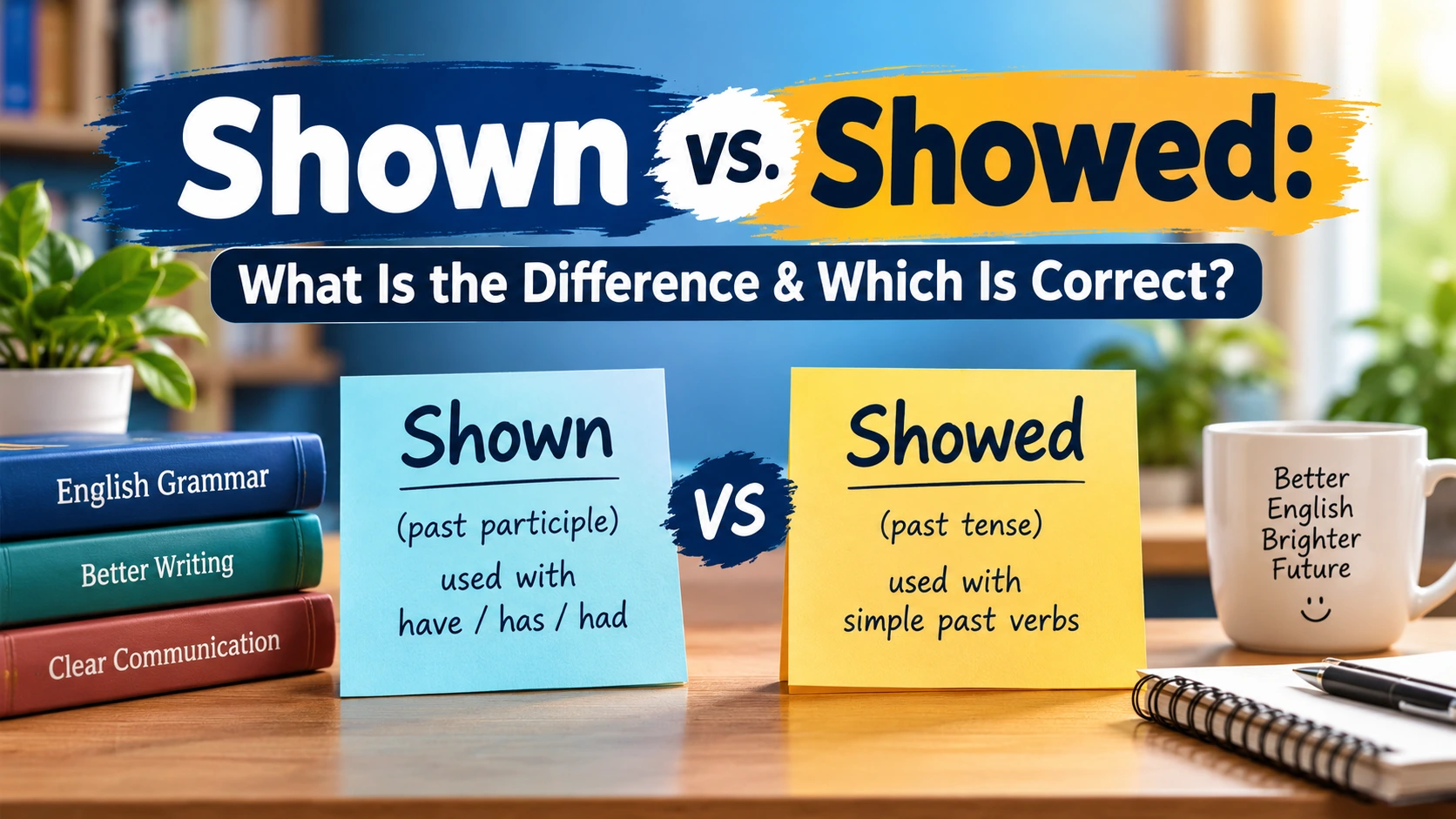
Shown vs. Showed: What Is the Difference & Which Is Correct?
“Shown” and “showed” are both forms of the verb “show,” but they do not work in exactly the same way. The main difference is grammatical: … Read More
“Shown” and “showed” are both forms of the verb “show,” but they do not work in exactly the same way. The main difference is grammatical: … Read More
“Has run” and “has ran” can look confusing because both use forms of the irregular verb “run.” However, only one is grammatically correct after “has.” … Read More
“Shown” and “showed” are both forms of the verb “show,” but they do not work in exactly the same way. The main difference is grammatical: … Read More

“In the street” and “on the street” are both grammatically correct, but they are not always interchangeable. The difference usually depends on whether you are … Read More
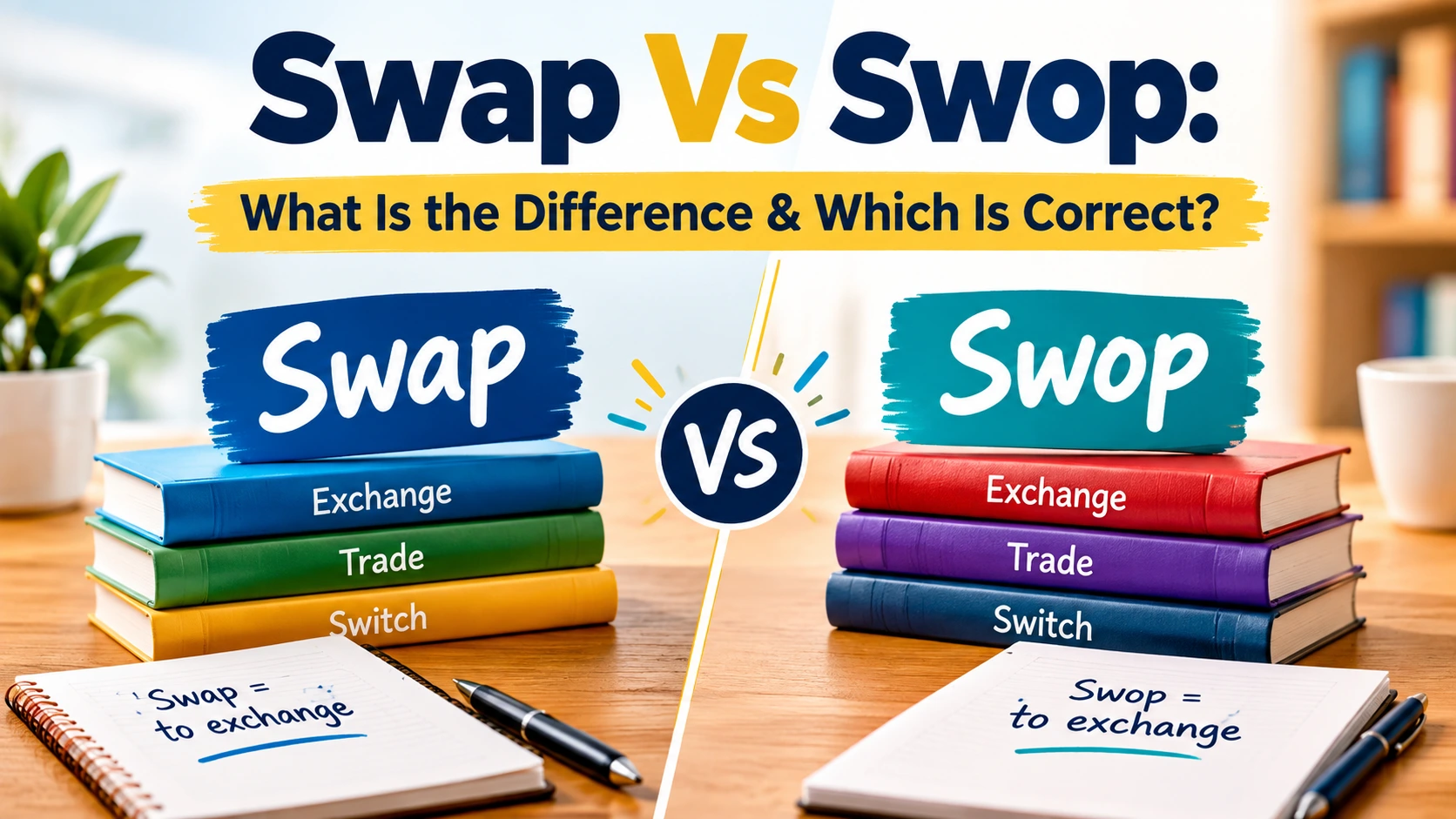
“Swap” and “swop” have the same basic meaning: to exchange one thing for another. The main difference is usage and regional preference. Swap is the … Read More

“Mother tongue” and “native language” are often used interchangeably, but they can describe slightly different aspects of a person’s language background. Both terms refer to … Read More

“To fast” and “too fast” may look almost identical, but they have completely different meanings and grammatical functions. To fast usually refers to the action … Read More

“Setup” and “set up” look almost identical, but they have different grammatical roles and uses. Setup is usually a noun or adjective, while set up … Read More

“Adapter” and “adaptor” have the same basic meaning and are often interchangeable. Both refer to something that adapts one thing to another, especially a device … Read More
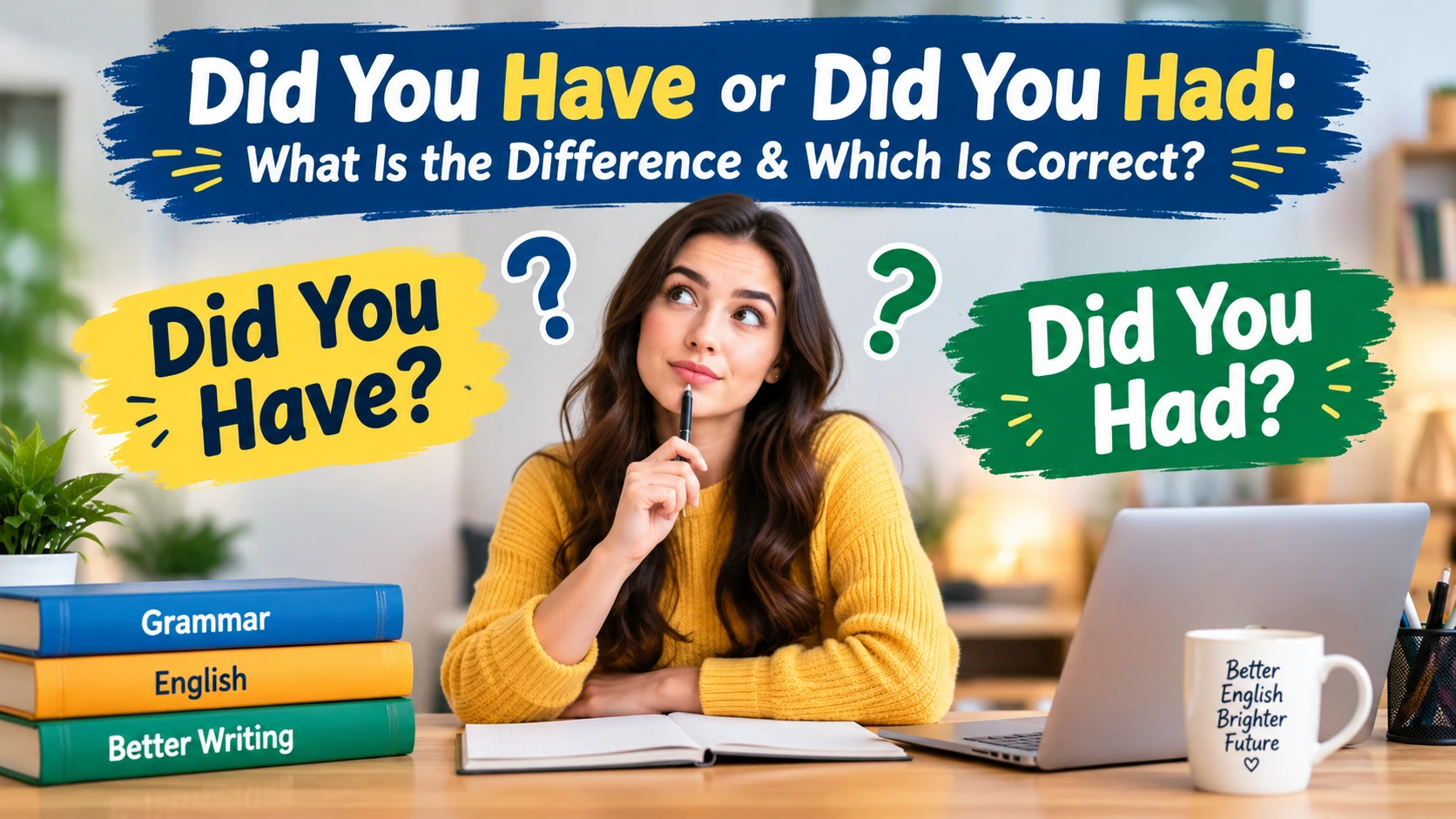
“Did you have” and “did you had” look almost identical, but only one is grammatically correct in standard English. The confusion happens because had is … Read More
Gramvera is a welcoming space for anyone who loves meaningful words and powerful expressions. Our collection brings together thoughtfully selected quotes memorable sayings, and inspiring ideas for everyday life.
Contact Us